
Beat the Heat: Your HVAC Memphis Guide to Lower Bills
Memphis summers punish weak air conditioners. A July afternoon can push the heat index past 100°F, and dew points in the 70s keep the air heavy long after sunset. Picking the right HVAC Memphis contractor and system decides whether your home stays cool and dry or turns into a sticky, expensive mess. The so what is simple: an undersized, aging, or poorly maintained system drives up your MLGW bill, invites mold growth, and fails on the hottest night of the year.
On recent AC service calls across Memphis, we keep finding the same pattern. Clogged filters, dirty coils, and refrigerant leaks cause most breakdowns. Nearly all of them were preventable with routine care.
Key Takeaways
- Size for humidity, not just square footage. A system that is too big cools fast but leaves moisture behind, which is why many Memphis homes feel cold and clammy at the same time.
- Tennessee follows the Southeast efficiency rule. New split-system central ACs under 45,000 Btu/h must meet at least 14.3 SEER2, so older 10 SEER units cost you far more to run.
- Book maintenance twice a year. Schedule cooling service in March or April and heating service in September or October, before the busy season hits and wait times stretch.
Why Memphis Weather Is Hard on HVAC Systems
Memphis weather is hard on HVAC systems because it combines long, humid summers with sudden winter cold snaps. Shelby County sits in IECC Climate Zone 3A, a hot-humid designation. Your system runs heavy cooling loads from May through September, then switches to heating when January lows drop near freezing.
Our Local Gov Certified HVAC experts frequently see this in local properties. Compressors wear out early. Condensate drains clog with algae. Ductwork in hot attics leaks cool air before it reaches your rooms.
Check Also: What Does a Heating Cooling System Cost Memphis?
Memphis Climate at a Glance
| Season | Typical Conditions | Main HVAC Stress | What Fails Most Often |
|---|---|---|---|
| Summer (Jun – Sep) | Highs around 90-93°F, high humidity | Constant compressor runtime | Capacitors, compressors, refrigerant leaks |
| Fall (Oct – Nov) | Mild days, cool nights | Mode switching | Thermostats, ignition systems |
| Winter (Dec – Feb) | Lows near 30-33°F, occasional ice | Heating load, defrost cycles | Heat pump defrost boards, furnace igniters |
| Spring (Mar – May) | Heavy pollen, storms, rising humidity | Airflow restriction | Clogged filters, dirty coils, surge damage |
Common Symptoms Memphis Homeowners Report
If you’ve spent a summer in Memphis, you know these warning signs:
- Warm air from vents even with the thermostat set low
- Water pooling near the indoor unit or furnace closet
- Short cycling, where the system turns on and off every few minutes
- Musty odors that point to moisture in the ducts or drain pan
- Ice on the refrigerant line or outdoor coil in midsummer
- Rooms that feel damp at 72°F
Each symptom has a specific root cause. You can match yours against our guide to common heating and cooling problems in Memphis homes before you call for service.
Residential HVAC Memphis Systems: What Works Best Here
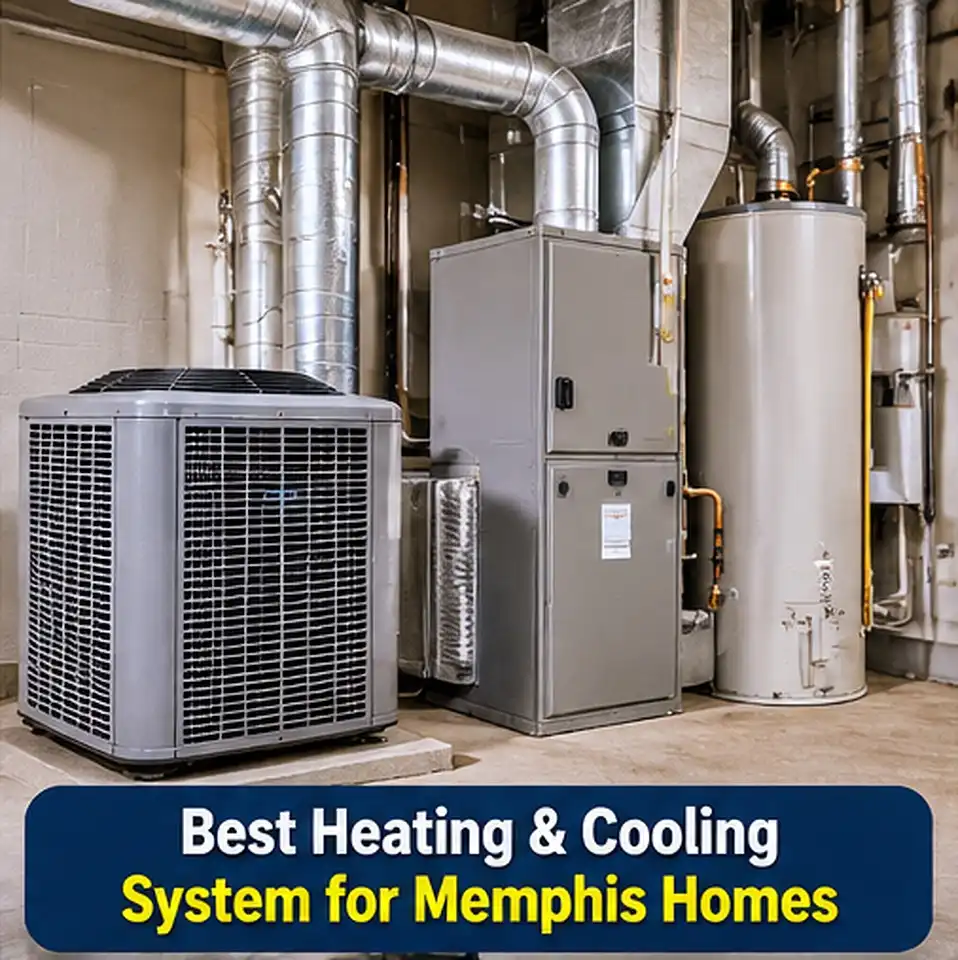
The right system for residential HVAC Memphis homes depends on your fuel source, home age, and duct condition. Most local houses use one of four setups. Each one handles humidity, cold snaps, and operating cost differently.
System Types Compared
| System Type | Best For | Memphis Pros | Memphis Cons | Typical Lifespan |
|---|---|---|---|---|
| Central AC + Gas Furnace | Homes with natural gas service | Strong winter heat, low gas costs | Two systems to maintain | AC: 12-15 yrs / Furnace: 15-20 yrs |
| Heat Pump (Air-Source) | All-electric homes | Heats and cools in one unit, efficient in mild winters | Uses backup heat strips in hard freezes | 10-15 yrs |
| Dual-Fuel (Heat Pump + Furnace) | Homes wanting maximum efficiency | Switches to gas when temps drop | Higher upfront cost | 12-18 yrs |
| Ductless Mini-Split | Additions, garages, older homes without ducts | Zoned control, no duct losses | Higher cost per room | 12-20 yrs |
Pros and Cons of Variable-Speed Systems
A variable-speed system (one that adjusts output in small steps instead of running full blast) suits Memphis especially well.
Pros:
- Runs longer at low speed, which pulls more moisture from the air
- Keeps temperatures steady within about 1°F
- Runs quieter than single-stage units
- Cuts energy use during mild weather
Cons:
- Costs more upfront than single-stage equipment
- Uses more complex parts that need trained technicians
- Saves less money in homes with leaky ductwork
When homeowners search for precision HVAC Memphis solutions, this is usually what they need: equipment that controls both temperature and humidity tightly. Precision comes from correct sizing first, equipment second. We run a Manual J load calculation on every replacement to size the system to your home, not to a rule of thumb.
Ask any installer for a written Manual J report before you sign a replacement contract.
Check Also: Backup Generator Service Memphis 38133 Residential: Power Up
SEER2 Efficiency Standards for Tennessee Homes
SEER2 is the current federal rating for air conditioner efficiency. SEER2 (Seasonal Energy Efficiency Ratio 2) measures cooling output per watt under test conditions that better reflect real ductwork. The DOE switched from SEER to SEER2 on January 1, 2023, and Tennessee falls in the Southeast region, which carries stricter minimums than northern states.
You can review the federal efficiency basics on the U.S. Department of Energy’s central air conditioning page.
Current Minimum Efficiency Requirements (Southeast Region)
| Equipment | Minimum Rating | Older Equivalent | Notes |
|---|---|---|---|
| Split AC under 45,000 Btu/h | 14.3 SEER2 | 15 SEER | Applies to most Memphis homes |
| Split AC 45,000 Btu/h and up | 13.8 SEER2 | 14.5 SEER | Larger homes, 4-5 ton systems |
| Split Heat Pump | 14.3 SEER2 / 7.5 HSPF2 | 15 SEER / 8.8 HSPF | National standard |
| Gas Furnace (non-weatherized) | 80% AFUE | Same | High-efficiency units reach 95-98% |
Estimated Cooling Cost by Efficiency Level
These figures assume a 3-ton system, about 1,800 cooling hours per year, and a blended rate near $0.12 per kWh. Your actual bill depends on insulation, thermostat habits, and your MLGW rate.
| Efficiency | Approx. Annual Cooling Cost | Savings vs. 10 SEER |
|---|---|---|
| 10 SEER (pre-2006 unit) | $780 | Baseline |
| 13 SEER (2006-2014 unit) | $600 | ~$180/yr |
| 14.3 SEER2 (current minimum) | $520 | ~$260/yr |
| 17 SEER2 | $440 | ~$340/yr |
| 20+ SEER2 (variable-speed) | $370 | ~$410/yr |
Higher SEER2 pays off fastest in homes with sealed ducts and good attic insulation. We check both before recommending any upgrade.
The 2025-2026 Refrigerant Change
New systems now use A2L refrigerants such as R-454B and R-32 under the federal AIM Act phasedown of R-410A. This matters for you in three ways:
- Expect higher repair costs on older R-410A systems as supply tightens.
- Plan a full replacement instead of mixing old outdoor units with new indoor coils.
- Hire certified technicians, because A2L refrigerants need updated handling procedures.
Check your outdoor unit’s data plate today to see which refrigerant your system uses.
Repair vs. Replace: Making the Right Call
The repair-or-replace decision comes down to age, repair cost, and efficiency. A simple rule works well: multiply the system’s age by the repair cost. If the result tops $5,000, replacement usually makes more financial sense.
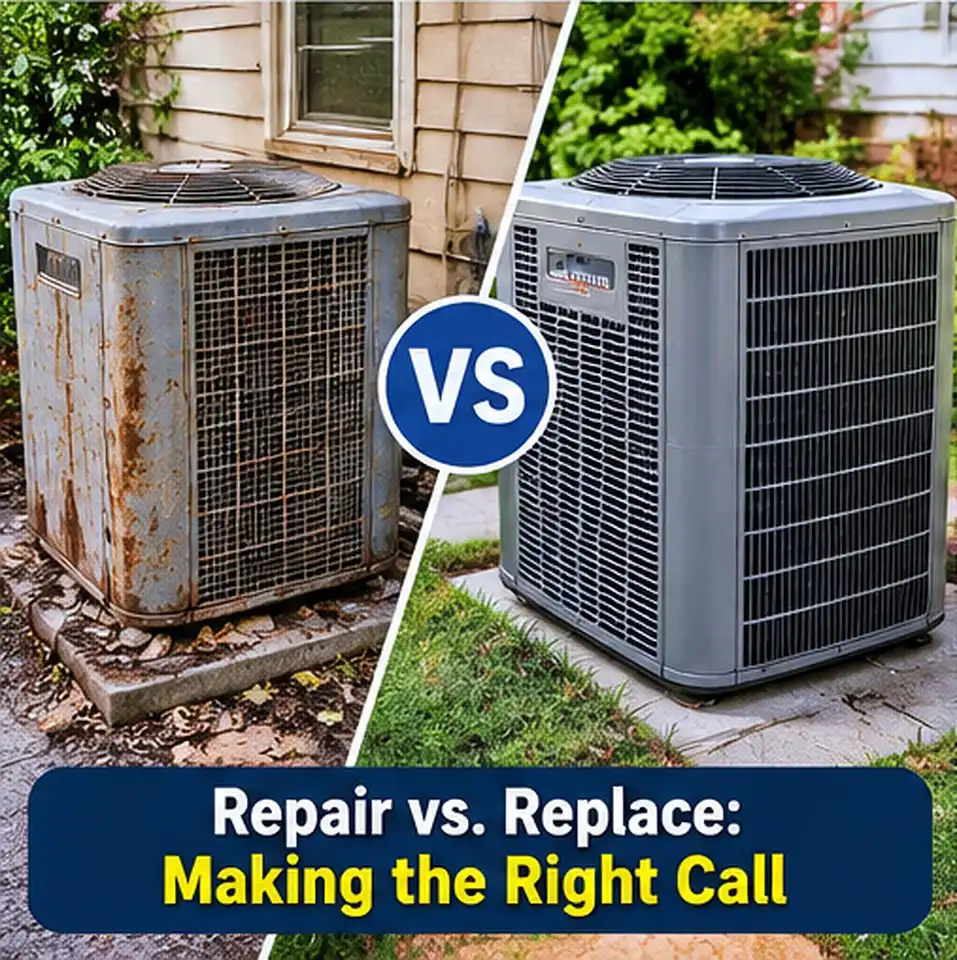
On recent AC service calls across Memphis, we have seen homeowners spend $2,500 on a compressor for a 14-year-old unit, only to lose the coil a year later. A good HVAC Memphis technician should give you both options in writing.
Repair vs. Replace Comparison
| Factor | Repair Makes Sense | Replace Makes Sense |
|---|---|---|
| System Age | Under 10 years | Over 12-15 years |
| Repair Cost | Under 25% of replacement cost | Over 50% of replacement cost |
| Refrigerant | R-410A with minor leak | R-22 system (no longer produced) |
| Efficiency | 14+ SEER | Under 13 SEER |
| Breakdown History | First major repair | Third repair in two years |
| Comfort | Even temps, normal humidity | Hot rooms, damp air, high bills |
| Warranty | Parts still covered | Warranty expired |
Signs It’s Time to Replace
- Your system still runs on R-22 refrigerant
- Your energy bills have climbed 20% or more with the same habits
- You need repairs every season
- Your home never drops below 55% indoor humidity in summer
- The heat exchanger in your furnace shows cracks
Our team handles everything from small fixes to full system swaps. You can see the full list of residential and commercial heating and cooling services we offer across Shelby County.
Get two written quotes, one for repair and one for replacement, before making any decision over $1,000.
HVAC Costs in Memphis: What to Budget
HVAC costs in Memphis vary by equipment size, efficiency, and installation complexity. The table below reflects typical local price ranges.
At HVAC Services Memphis, we provide transparent, upfront pricing before any work begins.
Cost Comparison Table
| Service | Typical Memphis Range | What Affects Price |
|---|---|---|
| Diagnostic / Service Call | $89 – $150 | After-hours, weekends |
| AC Tune-Up | $80 – $150 | System type, add-ons |
| Capacitor Replacement | $150 – $350 | Single vs. dual capacitor |
| Refrigerant Leak Repair | $300 – $1,500 | Leak location, refrigerant type |
| Blower Motor Replacement | $400 – $1,200 | PSC vs. ECM motor |
| Compressor Replacement | $1,500 – $3,000 | Tonnage, warranty status |
| Central AC Replacement | $5,500 – $11,000 | SEER2, tonnage, ductwork |
| Gas Furnace Replacement | $3,500 – $7,500 | AFUE, venting changes |
| Heat Pump System | $6,000 – $13,000 | Variable-speed vs. single-stage |
| Ductless Mini-Split (single zone) | $3,000 – $6,000 | Line set length, brand |
| Duct Sealing / Repair | $500 – $2,500 | Attic access, duct condition |
Ways to Lower Your Costs
- Check TVA EnergyRight programs for current rebates and financing on qualifying equipment.
- Schedule work in spring or fall when demand is lower.
- Seal your ductwork before buying a bigger system.
- Ask about maintenance plans that include priority service and repair discounts.
- Confirm tax credit status with your tax preparer, since the federal 25C credit ended for equipment installed after 2025.
Request a written estimate that lists equipment model numbers, SEER2 ratings, and labor separately.
Your Memphis HVAC Maintenance Checklist
Routine maintenance prevents most breakdowns and keeps efficiency high. Memphis homes need it more than most because spring pollen, summer humidity, and cottonwood fluff clog equipment fast. Every HVAC Memphis homeowner should follow a two-season routine.
Homeowner Monthly Tasks
- Check your air filter every 30 days in summer; replace every 1-3 months
- Use MERV 8-11 filters for a good balance of filtration and airflow
- Clear 2 feet of space around the outdoor unit
- Pour a cup of vinegar into the condensate drain line every few months to stop algae
- Keep supply vents open, even in unused rooms
Spring Cooling Tune-Up (Technician)
- Clean the condenser coil to restore heat transfer.
- Test capacitors and contactors for wear.
- Measure refrigerant charge and check for leaks.
- Flush the condensate drain and inspect the pan.
- Check blower speed and airflow across the coil.
- Verify thermostat calibration and wiring.
Fall Heating Tune-Up (Technician)
- Inspect the heat exchanger for cracks.
- Test for carbon monoxide at the furnace and vents.
- Clean the flame sensor and burners.
- Test heat pump defrost cycles and backup heat strips.
- Check gas pressure and ignition timing.
Indoor Air Quality Basics
The EPA recommends keeping indoor humidity between 30% and 50% to limit mold and dust mites. You can read more in the EPA’s indoor air quality resources. In Memphis, a whole-home dehumidifier or variable-speed system often makes the difference.
Put a $15 hygrometer in your living room this week to see where your humidity actually sits.
Quick Troubleshooting Before You Call
Many no-cool calls have simple fixes. Try these steps before scheduling service. Stop immediately if you smell gas or burning.
- Check the thermostat is set to COOL and below room temperature.
- Replace the batteries in a battery-powered thermostat.
- Reset the breaker for both the indoor and outdoor units.
- Inspect the air filter and replace it if dirty.
- Look at the outdoor unit for debris, ice, or a stopped fan.
- Check the float switch near the drain pan; a full pan shuts the system off.
- Wait 30 minutes after resetting so the compressor can restart safely.
If none of these work, turn the system off to protect the compressor and call a licensed technician.
How to Read HVAC Memphis Reviews
Online ratings help you compare contractors, but they need context. Reading HVAC Memphis reviews the right way protects you from upsell-heavy companies and unlicensed operators. Look for patterns, not single complaints.
What to Look For in Reviews
| Review Signal | Green Flag | Red Flag |
|---|---|---|
| Pricing | “Quoted upfront, no surprises” | “Final bill doubled the estimate” |
| Diagnosis | “Explained the problem clearly” | “Pushed replacement right away” |
| Timeliness | “Arrived within the window” | “No-show, no call” |
| Follow-Up | “Called to check the repair” | “Never returned calls” |
| Response to Complaints | Owner replies and offers a fix | Defensive or no reply |
| Review Volume | Steady reviews over years | Burst of reviews in one week |
What Makes the Best HVAC Memphis Contractor
The best HVAC Memphis contractor checks every box below, not just star ratings:
- Holds a valid Tennessee contractor license for the job size
- Pulls mechanical permits with Memphis and Shelby County when required
- Employs EPA Section 608 certified technicians
- Carries general liability and workers’ compensation insurance
- Performs load calculations before quoting replacements
- Offers written warranties on parts and labor
We built our reputation at HVAC Services Memphis on these exact standards: certified technicians, clear pricing, and plain-English explanations.
Verify any contractor’s license on the Tennessee Board for Licensing Contractors website before work starts.
HVAC Memphis School and Training Options
Strong local training builds a stronger workforce. Anyone searching HVAC Memphis school options has several paths into the trade. Knowing how technicians train also helps homeowners judge who is working in their homes.
Training and Certification Paths
| Path | Where / Who | Typical Length | What You Earn |
|---|---|---|---|
| TCAT Memphis HVAC/R Program | Tennessee College of Applied Technology | About 12-16 months | Diploma, hands-on lab hours |
| Community College Programs | Regional technical colleges | 1-2 years | Certificate or associate degree |
| Apprenticeship | Local contractors and trade groups | 3-5 years | Paid field experience |
| EPA Section 608 | Federal requirement | Exam-based | Legal refrigerant handling |
| NATE Certification | North American Technician Excellence | Exam-based | Industry skill credential |
Why Training Matters to Homeowners
- Certified technicians diagnose faster and more accurately
- EPA 608 holders can legally handle refrigerant
- NATE-certified techs show tested skills beyond the minimum
- Ongoing training covers new A2L refrigerants and variable-speed controls
Ask your technician which certifications they hold when they arrive.
24/7 Emergency HVAC Service in Memphis
Emergency service matters most when the weather turns dangerous. A failed AC during a heat advisory or a dead furnace during an ice storm puts children, seniors, and pets at risk. Our team provides 24/7 emergency troubleshooting for these moments.
When to Call for Emergency Service
| Situation | Urgency | What to Do Now |
|---|---|---|
| Gas smell near furnace | Immediate | Leave the home, call your gas utility, then call us |
| CO alarm sounding | Immediate | Get everyone outside, call 911 |
| No cooling with heat index above 100°F | Same day | Close blinds, use fans, call for service |
| No heat below 32°F | Same day | Use safe space heaters, protect pipes |
| Water leaking through ceiling | Same day | Shut off system, place buckets |
| Burning smell from vents | Immediate | Turn off system at breaker |
| Weak airflow or minor noise | Next available | Schedule standard service |
Save our number in your phone before summer peaks, so you are not searching during a breakdown.
Finding HVAC Near Me in Memphis: Our Service Areas
Local service means faster response times. When you search HVAC near me Memphis, you want a team that knows your neighborhood’s housing stock.
A 1920s Midtown bungalow and a 2010s Collierville build need very different approaches.
Neighborhood Insights from Our Technicians
| Area | Common Home Type | What We Often Find |
|---|---|---|
| Midtown / Cooper-Young | Older homes, limited ducts | Undersized ducts, ductless upgrade candidates |
| East Memphis | 1950s-1970s ranch homes | Aging furnaces, attic duct leaks |
| Germantown / Collierville | Larger 2-story homes | Uneven upstairs cooling, zoning needs |
| Bartlett / Cordova | 1980s-2000s suburbs | First or second system replacements |
| Downtown | Condos and lofts | Compact air handlers, condensate issues |
| Whitehaven / Hickory Hill | Mid-century and newer homes | Drain clogs, refrigerant leaks |
We serve Memphis and nearby Shelby County communities with the same certified standards everywhere. Check our full list of Memphis-area neighborhoods and communities we cover to confirm your address.
Enter your zip code on our service area page to confirm coverage and book a visit.
Mistakes Memphis Homeowners Should Avoid
The most expensive HVAC mistakes come from shortcuts. We see these on service calls every week:
- Buying an oversized unit that short cycles and leaves humidity high
- Skipping permits on replacements, which can void warranties and cause resale issues
- Ignoring duct leaks, which waste 20-30% of conditioned air in many homes
- Setting the thermostat to 65°F during heat waves, which overworks the compressor
- Using cheap fiberglass filters that let dust coat the coil
- Hiring based on the lowest price without checking licenses or reviews
The DOE suggests setting your thermostat to 78°F when you are home in summer. Start there and adjust in small steps.
FAQs
How often should I service my AC in Memphis?
Service your system twice a year. Book cooling maintenance in early spring and heating maintenance in early fall. Memphis humidity and pollen make annual-only service too infrequent for most homes.
What size AC does a 2,000-square-foot Memphis home need?
Many homes this size need 3 to 4 tons, but square footage alone is not enough. Insulation, windows, ceiling height, and sun exposure all change the answer. A Manual J load calculation gives you the correct size.
Why does my house feel humid even when the AC is running?
The system may be oversized, running short cycles, or set to a fan “ON” setting that re-evaporates moisture. Switch the fan to “AUTO” first. If humidity stays above 55%, have a technician check sizing and airflow.
Is a heat pump good enough for Memphis winters?
Yes, for most homes. Modern heat pumps heat efficiently down to the 20s and below, and Memphis rarely stays that cold for long. A dual-fuel setup adds gas backup for homeowners who want extra security during ice storms.
Do I need a permit to replace my HVAC system in Memphis?
System replacements typically require a mechanical permit through local code enforcement. A licensed contractor pulls the permit and schedules the inspection. Skipping it can cause problems with warranties and home sales.
How long does an AC last in Memphis?
Most central AC units last 12 to 15 years here. Heavy summer runtime and humidity can shorten that without regular maintenance. Coastal-grade coil coatings and annual cleaning help extend life.
What is the fastest way to get HVAC help after hours?
Call a contractor that offers true 24/7 emergency service with live dispatch. Describe your symptoms clearly so the technician brings the right parts. Keep your system’s brand and model number handy.
Protect Your Comfort Before the Next Heat Wave
Memphis homes need HVAC systems built for humidity, sized correctly, and maintained on schedule. The right HVAC Memphis partner saves you money every month and prevents emergency breakdowns. Our Local Gov Certified team brings honest diagnostics, upfront pricing, and 24/7 support to every home we serve.
Your next step is simple: check your filter today, note your system’s age and SEER rating, and schedule your seasonal tune-up with HVAC Services Memphis before the next temperature swing arrives.
Need help with your home's HVAC system?
Call about a new residential HVAC or AC service request.