
Drain Cleaning Memphis: Protect Your AC From Humid Clogs

A clogged drain can shut down your air conditioner on the hottest day of the year. In Memphis, your AC pulls gallons of water out of the air every day. That water has to go somewhere. When the condensate drain line clogs, it backs up into the drain pan, trips the float switch, and stops your cooling. If there is no switch, it leaks into your ceiling. Smart drain cleaning Memphis homeowners schedule on time prevents water damage, mold growth, and surprise repair bills.
Clogged drains are one of the most common HVAC problems we troubleshoot across the city.
Key Takeaways
- Flush your AC condensate line every 3 months from May through September. Memphis humidity feeds algae that can seal a 3/4-inch PVC line in one season.
- A $75-$200 drain service costs far less than a ceiling repair. Water damage from one attic overflow often runs $1,500 to $5,000+.
- Ask for a camera inspection before paying for repeat snaking. If the same drain clogs twice in 6 months, the root cause is probably roots, a sag, or a cracked pipe.
What Drain Cleaning Means for Your Memphis Home
Drain cleaning removes buildup that blocks water from leaving your home. In a typical house, that means two systems. The plumbing drains carry wastewater from sinks, tubs, and toilets to the sewer. The HVAC drains carry condensate (the water your AC or high-efficiency furnace pulls from the air) out of the house.
Most people think only about the plumbing side. Our Local Gov Certified HVAC experts frequently see this in local properties: the kitchen sink gets attention while the AC drain line has not been touched in years. Both matter. Only one can quietly soak your attic insulation.
Check Also: Hvac Maintenance
The Drains Inside a Typical Memphis Home
| Drain Type | What It Carries | Common Clog Cause | Who Usually Handles It |
|---|---|---|---|
| AC condensate line | Water pulled from humid air | Algae, sludge, dust, insects | HVAC technician |
| Furnace condensate line (90%+ AFUE) | Slightly acidic condensate | Scale, debris, winter freezing | HVAC technician |
| Kitchen drain | Food waste, grease, soap | Grease and food buildup | Plumber or homeowner |
| Bathroom drains | Hair, soap, toothpaste | Hair and soap scum | Plumber or homeowner |
| Main sewer line | All household wastewater | Tree roots, grease, pipe sags | Licensed plumber |
| Floor/utility drains | Washer and floor runoff | Lint, dirt, sediment | Plumber |
At HVAC Services Memphis, we focus on the HVAC drain side. We clear condensate lines, fix drain pans, and install safety float switches. For a collapsed sewer line, you need a licensed plumber with excavation or trenchless equipment. Being honest about that difference saves you money. You can view our full list of heating and cooling services to see exactly what we cover.
Your next step: find your indoor unit and locate the white or gray PVC pipe leaving it. That pipe is your condensate line.
Check Also: AC Repair Memphis: What Humid Summers Mean for Your System
Why Memphis Weather Clogs Drains Faster
Memphis weather creates more condensate and more clogs than drier climates. Summer dew points often sit in the low to mid 70s. That means your AC works as a dehumidifier for months at a time. If you’ve spent a summer in Memphis, you know the air feels thick by 8 a.m.
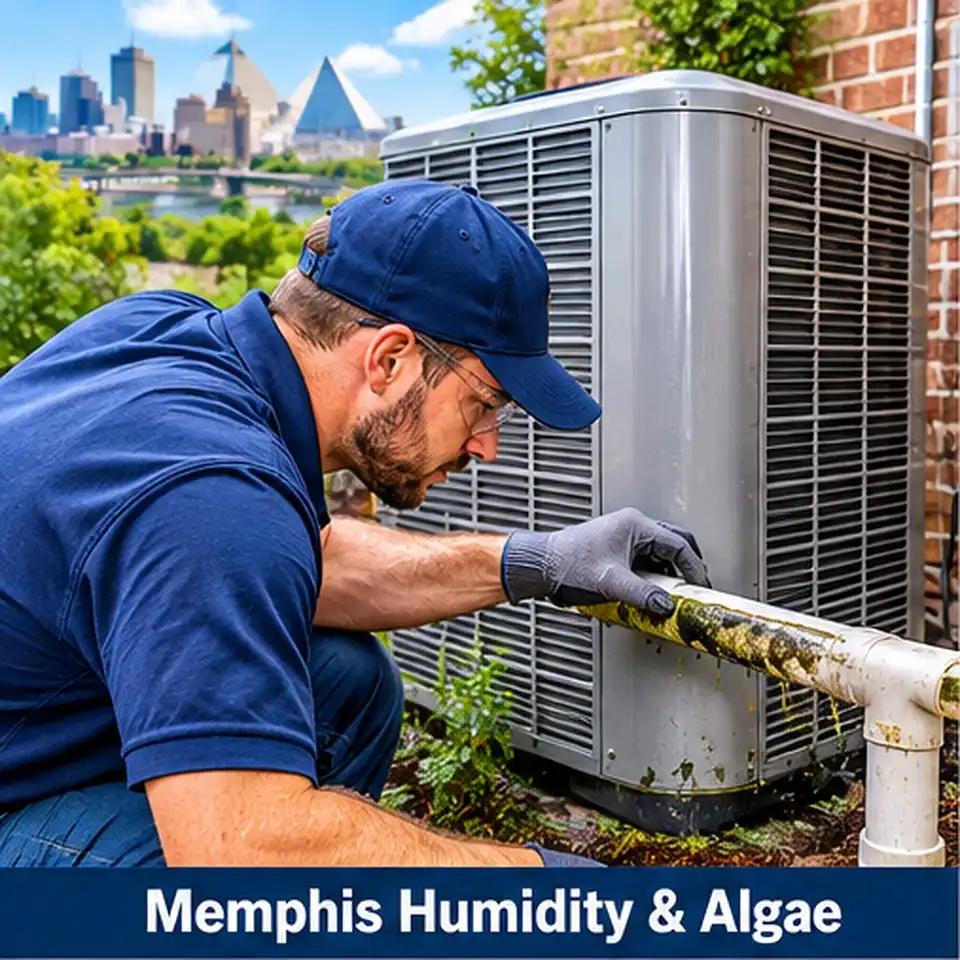
Summer Humidity Feeds Algae
A 3-ton system can remove 5 to 20 gallons of water per day in peak humidity. That steady flow of warm, dark water is perfect for algae and bacterial slime. Within weeks, the slime binds with dust from the coil and forms a gel plug. On recent AC service calls across Memphis, this gel is the number one reason a working system suddenly shuts off.
Winter Freezes Hit Furnace Drains
Memphis winters are mild until they are not. Hard freezes like those in February 2021, December 2022, and January 2024 froze exposed condensate lines on high-efficiency furnaces. A frozen line backs water into the furnace. The pressure switch then shuts the furnace down. Lines that exit through crawlspaces or exterior walls need insulation or heat tape.
Soil, Trees, and Older Pipes
Plumbing drains face a different Memphis problem. Older neighborhoods like Midtown, Cooper-Young, and parts of East Memphis still have clay tile or cast iron sewer laterals. Mature oaks and maples send roots into the joints. Expansive clay soil shifts with wet and dry seasons, which can create pipe sags (low spots where waste settles). Memphis water is naturally soft from the Memphis Sand Aquifer, so mineral scale is less of an issue here than grease and roots.
Check Also: AC Repair Near Me Car Memphis: Beat the Heat
Seasonal Drain Risk Calendar
| Season | Main Drain Risk | What to Do |
|---|---|---|
| Spring (Mar-May) | Algae starts growing as AC turns on | Flush condensate line, test float switch |
| Summer (Jun-Sep) | Peak condensate volume, fastest clogs | Flush every 4-8 weeks, check drain pan |
| Fall (Oct-Nov) | Leaves block outdoor drain exits, roots grow toward sewer lines | Clear exterior line ends, schedule sewer check |
| Winter (Dec-Feb) | Frozen furnace condensate lines, holiday grease clogs | Insulate exposed lines, avoid pouring grease |
We serve homeowners in Memphis and the neighborhoods and suburbs we cover across Shelby County and North Mississippi. Your next step: mark your calendar for a condensate flush the first week of each summer month.
Warning Signs Your Drains Need Cleaning
Clogged drains give clear warning signs before they fail. The trick is knowing which signs point to the HVAC side and which point to plumbing.
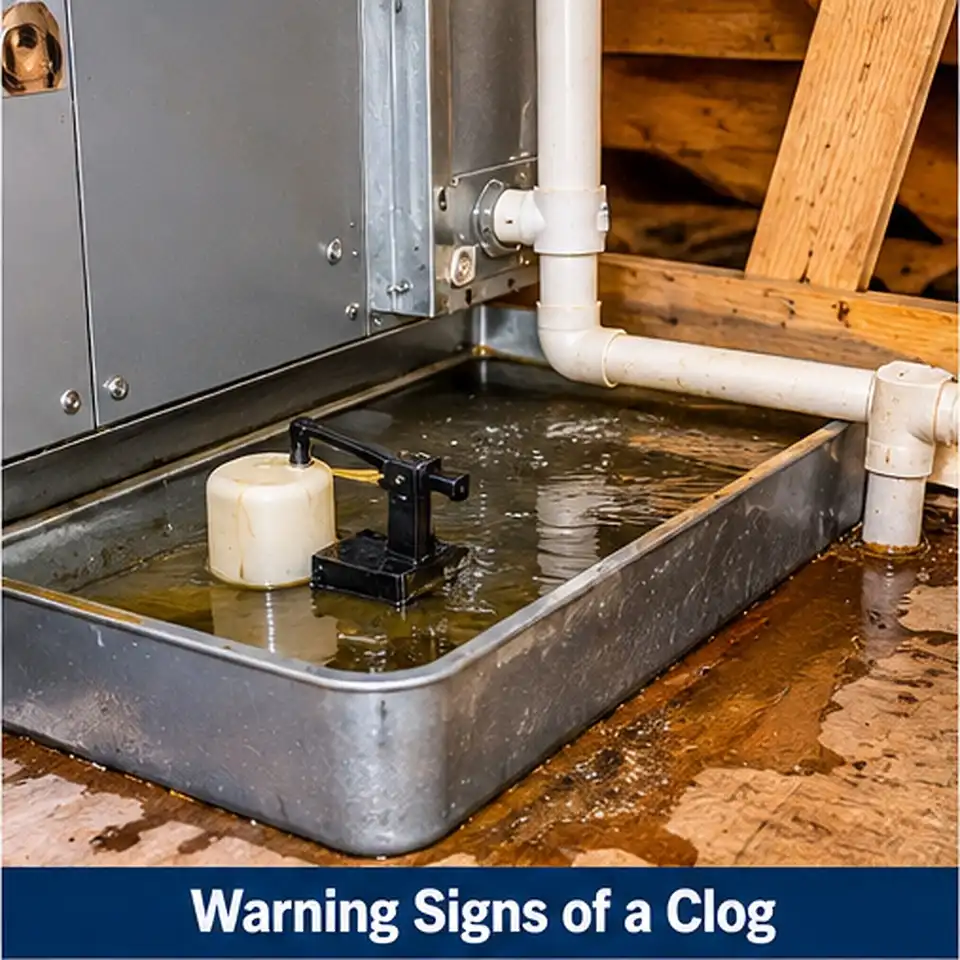
Catching them early keeps drain cleaning Memphis service simple and cheap.
Symptom Checker
| Symptom | Likely Cause | Urgency |
|---|---|---|
| AC shuts off, thermostat goes blank | Float switch tripped by full drain pan | High: no cooling until cleared |
| Water around indoor unit or furnace | Clogged condensate line or cracked pan | High: risk of floor/ceiling damage |
| Brown stain on ceiling below attic unit | Overflowing secondary drain pan | High: check attic now |
| Musty smell from vents | Standing water and mold in drain pan | Medium: indoor air quality issue |
| Water dripping from eave or window | Secondary drain line flowing (primary is clogged) | Medium: schedule service this week |
| Slow sink or tub drain | Hair, grease, soap buildup | Low to medium |
| Gurgling toilets, multiple slow drains | Main sewer line blockage | High: call a plumber |
| Sewage smell in yard | Broken or root-filled sewer line | High: call a plumber |
Steps to Troubleshoot an AC Drain Problem
- Check the thermostat. A blank screen with no power often means a tripped float switch, not a dead system.
- Inspect the drain pan. Look under the indoor coil for standing water.
- Find the drain line exit. It usually ends outside near the condenser or drips over a window.
- Look for flow. On a humid day, a working line should drip steadily while the AC runs.
- Check the secondary line. Water dripping from an eave means your primary line is blocked.
- Shut the system off. Turn off the thermostat and breaker if water is overflowing.
If you see water where it should not be, learn more about AC leaking water and other warning signs before the damage spreads. Your next step: walk outside today and confirm your condensate line is dripping while the AC runs.
Check Also: Beat the Heat: Your HVAC Memphis Guide to Lower Bills
Drain Cleaning Memphis Cost: 2026 Price Ranges
Drain cleaning Memphis prices depend on the drain type, the clog, and the timing. A simple condensate flush is one of the cheapest home services you can buy. A root-filled sewer line is one of the most expensive. The ranges below reflect typical local market rates in 2026.
Typical Drain Cleaning Memphis TN Price Ranges
| Service | Typical Memphis Range | Time on Site |
|---|---|---|
| AC condensate line flush/vacuum | $75 – $200 | 30-60 minutes |
| Condensate line clog + float switch reset | $125 – $275 | 45-90 minutes |
| Furnace condensate line clearing | $100 – $250 | 30-60 minutes |
| Single sink, tub, or shower drain | $125 – $300 | 30-90 minutes |
| Main sewer line snaking (cable auger) | $250 – $600 | 1-2 hours |
| Video camera inspection | $150 – $450 | 30-60 minutes |
| Hydro jetting (high-pressure water cleaning) | $400 – $1,000+ | 1-3 hours |
| Root cutting + jetting | $500 – $1,200+ | 2-4 hours |
| After-hours or weekend emergency fee | Add $75 – $250 | Varies |
These are typical ranges, not quotes. Your exact drain cleaning Memphis cost depends on access, pipe condition, and how long the clog has built up. Attic units with tight access take longer than closet units. We cover condensate work as part of our condensate line flushes during tune-ups, which often makes a separate drain call unnecessary.
What Drives the Price Up or Down
| Factor | Lowers Cost | Raises Cost |
|---|---|---|
| Access | Closet or garage unit | Cramped attic in July heat |
| Clog type | Fresh algae or hair | Hardened sludge, roots, grease |
| Timing | Scheduled weekday visit | Nights, weekends, holidays |
| Maintenance history | Line flushed last season | Never cleaned in 5+ years |
| Damage | Clog only | Cracked pan, failed pump, water damage |
| Bundling | Included with tune-up | Separate emergency call |
Cheap vs. Best: What You Actually Get
A search for cheap drain cleaning Memphis turns up coupons as low as $49. Those offers can be fine for a single slow sink. The catch: many low-price ads cover only a basic snake and add fees for anything else. The best drain cleaning Memphis service is the one that fixes the cause, not just the symptom.
Pros of low-cost drain specials
- Low upfront price for simple clogs
- Fast scheduling for minor issues
- Useful for a one-time hair or soap clog
Cons of low-cost drain specials
- Often no camera inspection to find the real cause
- Add-on fees for access, cleanouts, or after-hours
- Clog returns quickly if roots or algae remain
- Rarely includes float switch testing on AC drains
Your next step: when you call any provider, ask for the total price before work starts and what happens if the clog returns within 30 days.
Check Also: What Does a Heating Cooling System Cost Memphis?
Drain Cleaning Methods Compared
Each method fits a different clog. Using the wrong tool wastes money. For example, a cable snake can punch a hole through condensate algae, but it leaves slime on the pipe walls that regrows within weeks.

| Method | Best For | How It Works | Limits |
|---|---|---|---|
| Wet/dry vacuum | AC condensate lines | Suction pulls the clog out from the exterior end | Does not kill algae alone |
| Line flush + treatment | AC and furnace drains | Water and vinegar or approved cleaner clear and slow regrowth | Needs repeat every season |
| Nitrogen or CO2 blowout | Stubborn condensate clogs | Short pressure burst clears the line | Can split weak glued joints |
| Hand auger / snake | Sinks, tubs, toilets | Rotating cable breaks up clogs | Leaves residue on pipe walls |
| Machine cable auger | Main sewer lines, roots | Powered cutter head chews through roots | Roots grow back without follow-up |
| Hydro jetting | Grease, sludge, roots | 3,000-4,000 PSI water scours pipe walls | Not safe for fragile or broken pipes |
| Camera inspection | Repeat clogs, older homes | Video shows cracks, sags, roots | Diagnoses only, does not clear |
| Enzyme treatments | Monthly upkeep | Bacteria digest organic buildup | Too slow for active clogs |
Our HVAC Services Memphis team uses vacuum extraction and flushing on condensate lines because it removes the slime instead of pushing it deeper. Your next step: if your sewer line has needed snaking more than once, ask a plumber for a camera inspection before you pay for another round.
How to Clean Your AC Condensate Line Yourself
You can handle basic condensate maintenance in about 20 minutes. This keeps algae under control between professional visits. The U.S. Department of Energy notes that clogged drain channels prevent an AC from reducing humidity, and the extra moisture can discolor walls or carpet.
DIY Condensate Flush Steps
- Turn off the system. Set the thermostat to off and switch off the breaker for the indoor unit.
- Find the access port. Look for a T-shaped fitting with a cap on the drain line near the indoor unit.
- Remove the cap. Check for standing water. If water sits at the top, the line is clogged.
- Vacuum the exterior end. Hold a wet/dry vac hose to the outside line exit for 60-90 seconds.
- Pour a cleaning solution. Add 1/4 to 1 cup of distilled white vinegar into the access port.
- Wait 30 minutes. Let the vinegar break down algae.
- Flush with water. Pour a cup of clean water and confirm it drains freely outside.
- Replace the cap and restore power. Watch for a steady drip outside within 15-30 minutes.
Safety Rules
- Never mix cleaners. Bleach plus vinegar creates toxic chlorine gas.
- Skip harsh chemical drain openers. They can damage PVC glue joints and coil pans.
- Do not stand on attic ceiling joists without boards. Falls through drywall are common.
- Leave the electrical side alone. Float switches and condensate pumps involve low-voltage wiring.
If your AC still will not restart after a flush, the issue may be more than a clog. Read about why an AC stops cooling to rule out other causes. Your next step: buy a gallon of distilled vinegar and set a reminder for your first flush.
Repair vs. Replace: Drain Components
Some drain problems need a cleaning. Others need a new part.
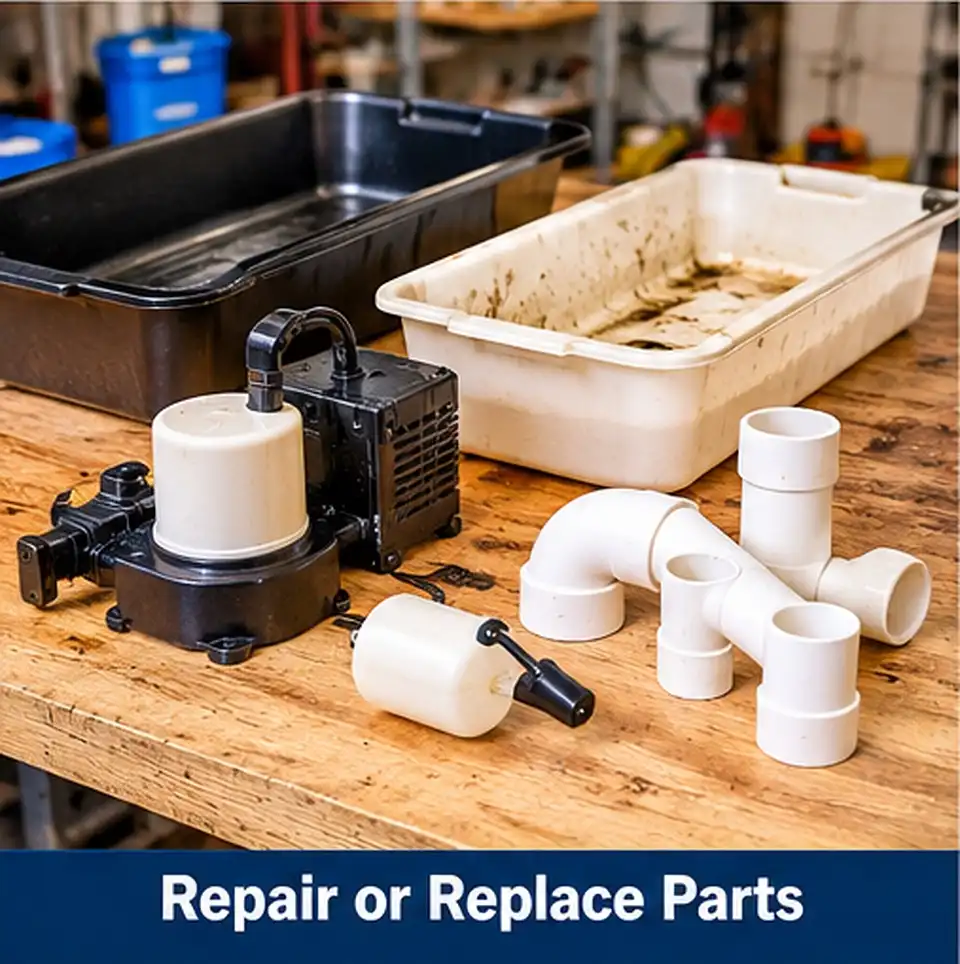
Replacing a rusted pan costs far less than repairing the ceiling it eventually drips through.
| Component | Typical Lifespan | Repair If… | Replace If… | Typical Replace Cost |
|---|---|---|---|---|
| Primary drain pan (under coil) | 10-15 years | Minor clog in drain outlet | Rust holes, cracks, warping | $300 – $900+ (labor heavy) |
| Secondary/emergency pan | 10-20 years | Debris or blocked outlet | Rust, cracks, wrong size | $150 – $400 |
| Float safety switch | 5-10 years | Stuck float, needs cleaning | Fails test, corroded | $75 – $200 |
| Condensate pump | 3-7 years | Dirty reservoir | Motor hums, won’t pump, cracked tank | $150 – $400 |
| PVC condensate line | 20+ years | Algae clog | Sagging, cracked, no trap | $150 – $500 |
| Clay/cast iron sewer lateral | 50-100 years | Roots, grease clogs | Collapse, major cracks, bellies | $3,000 – $15,000+ |
Signs Replacement Is the Smarter Call
- Rust flakes in the drain pan
- The same clog returns within 3 months
- The condensate pump cycles nonstop or runs loudly
- No float switch on an attic unit
- Camera footage shows offset joints or a collapsed section
Your next step: ask your technician to show you a photo of your drain pan during your next visit.
Efficiency Standards and Codes That Affect Your Drains
Newer, high-efficiency systems create more condensate, not less. Variable-speed systems run longer at lower speeds, which pulls more moisture from Memphis air.

That is great for comfort. It also means a clean drain line matters more than ever.
Current Efficiency Standards for Tennessee
| Equipment | 2023+ Minimum (Southeast Region) | Drain Impact |
|---|---|---|
| Split AC under 45,000 Btu/h | 14.3 SEER2 | Longer run times, more condensate |
| Split AC 45,000 Btu/h and up | 13.8 SEER2 | Higher volume in large homes |
| Split heat pump | 15.2 SEER2 / 7.8 HSPF2 | Condensate in summer, defrost water in winter |
| High-efficiency gas furnace | 90%+ AFUE (condensing) | Acidic condensate, freeze risk |
New systems now use A2L refrigerants like R-454B and R-32 under the federal refrigerant phase-down. These systems still rely on the same condensate drain setup. Upgrading equipment is a great time to replace an old pan and add a float switch.
Code and Safety Requirements
| Requirement | What It Means for You |
|---|---|
| Secondary drain pan or float switch (Mechanical Code, attic/ceiling units) | Required where overflow could damage the building |
| Condensate trap | Prevents air from pulling through the line and blocking flow |
| Proper slope (about 1/8 inch per foot minimum) | Water must flow by gravity, no sags |
| Approved discharge location | Condensate cannot dump where it creates hazards |
| Freeze protection | Exterior lines on condensing furnaces need insulation |
We pair drain upgrades with indoor air quality and maintenance plans so your system meets current code. Your next step: check whether your attic unit has a float switch. If it does not, add one before next summer.
Moisture, Mold, and Your Indoor Air
A clogged drain is also an indoor air problem. Standing water in a drain pan grows mold and bacteria within days in Memphis heat. Your blower then spreads those spores through every room. The EPA says the key to mold control is controlling moisture inside your home and fixing leaks quickly.
Indoor Humidity Targets
| Indoor Relative Humidity | What Happens |
|---|---|
| Below 30% | Dry skin, static, cracked wood |
| 30% – 50% | Ideal comfort and mold control |
| 50% – 60% | Sticky feeling, dust mites thrive |
| Above 60% | Mold growth risk rises sharply |
A clogged drain line can push your indoor humidity above 60% even while the AC runs. That makes 74°F feel like 78°F. You then lower the thermostat, which raises your MLGW bill. Your next step: place a $15 hygrometer in your living room and check readings during July afternoons.
Real Field Scenarios From Memphis Homes
Real calls show how small clogs become big repairs. These scenarios reflect patterns our technicians see every season.
Scenario 1: The Attic Overflow
On recent AC service calls across Memphis, we found an attic unit with no float switch and a rusted secondary pan. The primary line had clogged with algae. Water ran through the pan and soaked the ceiling drywall over a bedroom. A $150 flush six months earlier would have prevented a repair bill in the thousands.
Scenario 2: The Mystery Shutdown
A homeowner called because the AC “died” on a 97°F afternoon. The thermostat screen was blank. The cause was a tripped float switch from a clogged line. We vacuumed the line, treated it, and the system restarted in under an hour. No parts. No major repair.
Scenario 3: The Frozen Furnace Drain
During a January cold snap, a 95% AFUE furnace kept shutting down. Its condensate line ran through an uninsulated crawlspace and froze solid. We thawed the line, rerouted a section, and added insulation. The furnace ran normally the rest of the winter.
We handle calls like these in Germantown, Bartlett, Collierville, and nearby cities. Your next step: if any of these sound familiar, schedule a drain inspection before the next temperature swing.
Your Seasonal Drain Maintenance Checklist
Drain maintenance takes minutes and prevents most emergencies. Follow this checklist to keep both your HVAC and plumbing drains flowing.
Spring Checklist
- Flush the AC condensate line with vinegar
- Test the float switch by lifting the float (system should shut off)
- Clear leaves from the exterior drain line exit
- Check the drain pan for rust or standing water
Summer Checklist
- Flush the condensate line every 4-8 weeks
- Watch for steady drips outside while the AC runs
- Check ceilings below attic units for stains
- Replace air filters every 1-3 months to keep dust out of the coil and pan
Fall Checklist
- Clean the condensate pump reservoir if you have one
- Schedule a sewer camera check for older homes with large trees
- Inspect exterior lines for cracks or loose fittings
Winter Checklist
- Insulate furnace condensate lines in crawlspaces and garages
- Avoid pouring grease down kitchen drains during holiday cooking
- Watch for furnace shutdowns during hard freezes
Your next step: print this checklist and tape it near your indoor unit or water heater.
How to Choose the Right Drain Service in Memphis
The right provider explains the problem, shows the proof, and quotes the price first. Homeowners often search for premier drain cleaning Memphis TN companies and get a mix of plumbers and HVAC contractors. Match the provider to the drain. HVAC drains need an HVAC technician. Sewer lines need a plumber.

Questions to Ask Before You Hire
- Ask what type of drain they service. Confirm they handle condensate lines, sewer lines, or both.
- Request upfront, flat-rate pricing. Avoid open-ended hourly billing on simple jobs.
- Ask for photo or video proof. Good technicians show you the clog or the damage.
- Confirm licensing and certification. Check local and state credentials.
- Ask about a service guarantee. Find out what happens if the clog returns.
- Check emergency availability. Memphis AC failures do not wait for business hours.
Provider Comparison
| What to Look For | Strong Provider | Red Flag |
|---|---|---|
| Pricing | Written quote before work | “We’ll see once we start” |
| Diagnosis | Finds the root cause | Snakes the line and leaves |
| Proof | Photos, camera footage | No explanation |
| Credentials | Licensed, certified, insured | Vague or missing details |
| Follow-up | Maintenance tips, guarantee | No warranty |
When you need local, certified technicians for AC or furnace drains, choose a team that treats drain care as part of total system health. That approach makes drain cleaning Memphis homeowners pay for once instead of every few months. Your next step: call two providers, ask these six questions, and compare the answers.
FAQs
How often should Memphis homeowners clean their AC drain line?
Flush it at least every 3 months during cooling season. In homes with heavy algae history, flush monthly from June through September. Memphis humidity makes clogs form faster than in drier cities.
What is the average drain cleaning Memphis cost for an AC condensate line?
Most condensate line clearings run $75 to $275. The price rises for attic access, after-hours calls, or added repairs like a new float switch or pump.
Why does my AC keep shutting off on humid afternoons?
A clogged condensate line often trips the float switch, which cuts power to the system. This shows up most on humid days because the AC is producing the most water. Clearing the line usually restores cooling.
Can I pour bleach down my AC drain line?
Use distilled white vinegar instead. Bleach can damage some pan materials and metal coil parts. Never mix bleach and vinegar, which creates a toxic gas.
Do high-efficiency furnaces in Memphis need drain cleaning?
Yes. Furnaces rated 90% AFUE or higher produce condensate year-round during heating season. Their lines can clog with debris or freeze during cold snaps. Insulating exposed lines prevents most winter shutdowns.
Is cheap drain cleaning worth it for a recurring clog?
A low-cost snake can clear a one-time clog. For a recurring clog, pay for a camera inspection first. That reveals roots, sags, or cracks so you fix the real cause once.
Does homeowners insurance cover water damage from a clogged AC drain?
Coverage depends on your policy. Many insurers exclude damage from lack of maintenance. Keeping records of drain cleaning and tune-ups helps support any claim.
Next Steps for a Dry, Cool Memphis Home
Clean drains keep your AC running and your ceilings dry.
Here is what to remember:
- Flush your condensate line every 3 months during cooling season, monthly if it clogs often.
- Install a float switch on any attic or closet unit without one.
- Use camera inspections to stop paying for the same clog twice.
- Insulate furnace drain lines before the next Memphis freeze.
- Get upfront pricing from any provider before work begins.
Your next step: check your outdoor condensate line today. If it is not dripping while your system runs, schedule a drain service before a small clog turns into a ceiling repair.
Need help with your home's HVAC system?
Call about a new residential HVAC or AC service request.